
Kids today face an ever growing number of temptations ranging from drinking and smoking, drugs, gambling and pre-martial sex. Unfortunately, due to their youth and inexperience they fail to realize that what they do in their youth can have a great effect on their quality of life as they grow older.
On the other hand, as people grow older and approach retirement age they begin to realize that the carelessness of their youth did have a profound effect on the quality of their life but now they are ready to do whatever it takes to remove as much risk as they can. As a result, an ever increasing trend has been the purchasing of long term care health insurance as one way of reducing the financial risk a prolonged illness poses.
Long term health insurance is one the best ways to reduce whatever fears you may have in terms of how you'll be able to take care of your health after (and in some cases at a much younger age if you are the victim of an untimely accident) retirement as well as ensure your family (your spouse, children and even your grandchildren) that they won't get saddled with the potentially huge amount of debt that can result from the high-cost of medical care. Long term care health insurance is one of the best ways to guarantee that not only will you receive higher quality care but that you won't lose a lifetime worth of savings in the process.
Because health care costs continue to rise at dramatic rates nearly every year, it's becoming increasing advisable to begin coverage much earlier in life. Traditionally, individuals wouldn't even consider long term care until nearing retirement or even until after retirement but you may want to reconsider your thinking if that's been your plan. A few big reasons you may want to consider looking into long term care health insurance as early as your mid 50's are premiums and approval. Policies taken out when someone is in their early 50's (this is still seen as a favorable age group ) is much less expensive then one initiated in their early to mid 60's and the older you get the higher the premiums.
However, if you take out a policy when you are younger you will continue to pay the same premium even as you get older. Sure, you may pay for 10, 15 or 20 years before you need it but when you do need it you'll have much better coverage.
Another big reason you may want to consider taking out a policy earlier in life is that you greatly increase your odds of getting approved with no riders or other exclusions. Once you get hurt or sick and realize you need long term health insurance then it's too late to get coverage because no insurance company will issue you a policy - at any price.
If you're currently a little older and you have other income besides your Social Security benefits or Supplemental Security Income (SSI) and you absolutely have no trouble paying for your daily needs and all your monthly expenses then you should definitely look into a long term care health insurance plan.
Once you make the decision to look into purchasing a long term care health insurance plan you need to be aware that whatever company you talk too will assess your health and you current state of life before issuing you a policy. That will assess your ability to handle the Activities of Daily Living (ADL).
These so-called Activities of Daily Living are activities like: taking a bath, continence, dressing yourself, eating by yourself, going to the toilet (without any help from others) and getting yourself in and out of bed. If you can't most if not all of these activities you change of getting approved and a policy issued is greatly reduced.
On the other hand, different companies use different approval criteria and there are different types of policies you can apply for. Some policies are geared towards home health care or having a personal home nurse while others are designed for care to be received while staying in a long term care facility. You will be given the option to choose the type of plan you would like when you apply but like most things, you pay for what you get and different plans come will different price tags. Just make sure you thoroughly understand all your options first and if you feel pressured and uncomfortable then politely move on to the next company to apply.
This article may be reproduced only in its entirety.
Long Term Care Health Insurance - A Closer Look
Labels: health insurance for low income, online health insurance, private health insurance, self employed health insurance, short term health insurance, student health insurance, temporary health insurance |
Short term health insurance
Labels: find health insurance, global health insurance, health insurance for the self employed, short term health insurance, temporary health insurance |If you are between jobs or are awaiting another health insurance policy to come into effect you may find that you have a gap in your health insurance coverage. This period is a high risk as you are effectively uninsured when it comes to health insurance. So what are you to do in this interim period? Well one of the best options in such situations is to consider taking out a short-term health insurance policy. This will cover you for a limited or fixed term.
Usually, short-term health insurance policies last for periods of less than six months. There are policies that will cover you for up to twelve months also however. If you need coverage for periods longer than this, you should probably be considering standard individual or family health insurance plans.
Application is Simple
One of the benefits of short-term health insurance is that the application process is somewhat more straightforward. These policies are really designed to cover unforeseen accidents and other emergency situations and are not recommended for comprehensive health protection. They will therefore generally not cover such advanced features as preventive treatments, physical and diagnostic tests, immunizations, dental and vision expenses which you should try to avoid for the period under which you are covered by the short term plan.
The main concern, and something you should be aware of if you are considering a short term plan is that they will make you ineligible for guaranteed issue health plans. These plans are most commonly referred to as HIPAA plans. They can be very expensive and are used in cases where the insured has existing medical conditions, which would otherwise make it very difficult for you to obtain health insurance. If you think you will need eligibility for a HIPAA plan, you should not purchase short-term health insurance. The Health Insurance Portability and Accountability Act or HIPAA, and state health insurance rights are important protections and you should seek advice from a benefits advisor in these regards.
Are you covered?
Short-term health insurance plans will not cover existing medical conditions. While the exact definition depends on your circumstances and on state laws, what this means is that if you have been diagnosed in the last three to five years or have been receiving treatment for a condition, it will be a pre-existing condition and you will not get coverage for it under your short term plan. Therefore, if this applies to you, it is recommended that you extend your current comprehensive policy rather than switch to a short-term plan.
Discount Health Benefits Plans: A Sensible Alternative To Traditional Insurance Plans
Labels: health insurance premium, health insurance provider, individual health insurance, medical health insurance, short term health insurance | A recent poll revealed that over 70% of Americans are either uninsured or underinsured. Surprisingly, the majority are from middle class households. Many of who are not offered health benefits by their employer or whom can’t afford the high-priced insurance premiums being offered.
In some states, there is an epidemic of children whose teeth are slowly rottening due to the lack of proper dental care. To help bring relief to this growing crisis, discount health care benefits providers have emerged. These companies do not provide health insurance, but they give an alternative that allows consumers to receive discounted fees per service. Unlike traditional insurance plans, these companies often have little or no exclusions, such as pre-existing conditions. Another plus is that consumers with immediate health care needs, can usually be seen by a doctor without having to wait for their coverage to “kick in”.
A potential drawback to discount health benefits plan is that consumers will pay for services upfront or at the time of service; unless other arrangements are made with that individual provider. This, in contrary to paying a co-pay or deductible at the time of service. Consumers with flexible spending accounts or medical savings accounts will be able to take advantage of this circumstance.
In some situations, depending on your health care provider’s policies, consumers have been able to use both the discount health plan alongside their insurance for even deeper savings. For example, you go into the dentist office for an extraction. The bill is $300. You hand your discount card to the insurance department, she gives you the discount, which normally ranges from 50 – 80%. This cuts your bill by up to $240! Leaving you with $60 left to pay. You pay the $60. Then file a claim with your insurance company for the $60. Let’s say your insurance company pays 80% of your bill. They will refund you $48 (80%), leaving you with a net bill of only $12, for what would have cost $300 normal price, or $60 with your insurance alone.
While some consumers are struggling with the high and growing price of insurance, others are discovering the savings of discount health benefits plans. By the year 2010, it is predicted that consumer driven health care, will be the future, leaving traditional insurance plans, to be a thing of the past.
Basics of Hospital Expense Insurance
Labels: online health insurance, private health insurance, self employed health insurance, short term health insurance, student health insurance, temporary health insurance, united health insurance |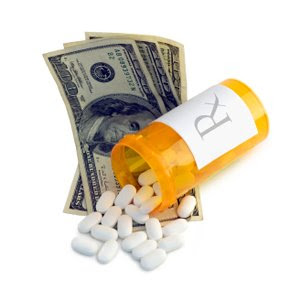 Hospital expense insurance covers the expenses incurred on a patient’s hospital stay, provided he/she already has a subscription in this regard.
Nobody has ever lived a life time without a bout of illness and a subsequent hospital stay. This is something inevitable as no one is perfectly immune to diseases. And every hospital stay one has brings with the discharge order a mind boggling bill - the psychological effect of which is more than enough to send back the fitness-regained patient for another few days for treatment in the same hospital. When it comes to health related issues, no one could keep a check on the cash flow. After all, in such circumstances, it is the question of life and health that supersedes the financial issue. But with hospital expense insurance, one could reclaim the money spent by producing all the relevant certificates and bill.
Hospital expense insurance is one form of the health insurance that pays for the expenses incurred for the patient’s room and board costs. The coverage also compensates financially for incidental expenses such as x-rays, the use of the operating room, anesthesia, drugs and laboratory charges. When it comes to payment, some insurance providers prefer to pay the claim on an indemnity style where the insurer pays a definite sum each day for a set maximum number of days. Some players, on the other hand, opt to pay the actual bill or a percentage of the actual amount regardless of what the amount the bill indicates.
Generally, at the time of the payment, the insured is paid a claim that amounts to a fixed percentage of the policy amount minus the deductibles. Various hospital expense insurance policies follow different schemes and hence the payable amount varies a lot. The customer should ideally see if the "stop-loss" or "coinsurance maximum," which limits the insured person’s liability is at an acceptable limit. A decently followed scheme does not put much burden on the customer. Also look for those insurance providers who offer a maximum benefit ceiling.
Practically, there are a large number of hospital expense insurance policies which are rejected on technical grounds. The reality is that, for the insurance firms, their aim is to make profits and by denying one a hospital expense insurance policy claim, actually the company is gaining profits in larger numbers. Inadequacy or discrepancy in the information provided by the customer is one of the grounds in which they deny a policy. Hence, the customer should ensure that he/she provides the correct and updated information to the insurance companies.
Also, the customer must be thorough with the rules and regulations that define the hospital expense insurance policy. See to it that all relevant documents and papers are in place. Remember, a missed piece of document is a valid ground for refusal of a claim.
Before buying any hospital expense insurance policy, the customer ideally should be doing a bit of research on the insurance scene of his/her place of stay. One can go by references if you have any trusted friend or you know anybody who have had successfully claimed the hospital expense insurance. In this regard, browsing the insurance company’s home sites facilitates for an easy comparison of similar policies and their rates.
To conclude, how much the customer may need to shell out along side the claim amount so as to pay the hospital expense directly depends upon the hospital expense insurance policy he/she selected. And that requires a good application of discerning senses and yes, a bit of common sense as well.

 Posts
Posts

