
Kids today face an ever growing number of temptations ranging from drinking and smoking, drugs, gambling and pre-martial sex. Unfortunately, due to their youth and inexperience they fail to realize that what they do in their youth can have a great effect on their quality of life as they grow older.
On the other hand, as people grow older and approach retirement age they begin to realize that the carelessness of their youth did have a profound effect on the quality of their life but now they are ready to do whatever it takes to remove as much risk as they can. As a result, an ever increasing trend has been the purchasing of long term care health insurance as one way of reducing the financial risk a prolonged illness poses.
Long term health insurance is one the best ways to reduce whatever fears you may have in terms of how you'll be able to take care of your health after (and in some cases at a much younger age if you are the victim of an untimely accident) retirement as well as ensure your family (your spouse, children and even your grandchildren) that they won't get saddled with the potentially huge amount of debt that can result from the high-cost of medical care. Long term care health insurance is one of the best ways to guarantee that not only will you receive higher quality care but that you won't lose a lifetime worth of savings in the process.
Because health care costs continue to rise at dramatic rates nearly every year, it's becoming increasing advisable to begin coverage much earlier in life. Traditionally, individuals wouldn't even consider long term care until nearing retirement or even until after retirement but you may want to reconsider your thinking if that's been your plan. A few big reasons you may want to consider looking into long term care health insurance as early as your mid 50's are premiums and approval. Policies taken out when someone is in their early 50's (this is still seen as a favorable age group ) is much less expensive then one initiated in their early to mid 60's and the older you get the higher the premiums.
However, if you take out a policy when you are younger you will continue to pay the same premium even as you get older. Sure, you may pay for 10, 15 or 20 years before you need it but when you do need it you'll have much better coverage.
Another big reason you may want to consider taking out a policy earlier in life is that you greatly increase your odds of getting approved with no riders or other exclusions. Once you get hurt or sick and realize you need long term health insurance then it's too late to get coverage because no insurance company will issue you a policy - at any price.
If you're currently a little older and you have other income besides your Social Security benefits or Supplemental Security Income (SSI) and you absolutely have no trouble paying for your daily needs and all your monthly expenses then you should definitely look into a long term care health insurance plan.
Once you make the decision to look into purchasing a long term care health insurance plan you need to be aware that whatever company you talk too will assess your health and you current state of life before issuing you a policy. That will assess your ability to handle the Activities of Daily Living (ADL).
These so-called Activities of Daily Living are activities like: taking a bath, continence, dressing yourself, eating by yourself, going to the toilet (without any help from others) and getting yourself in and out of bed. If you can't most if not all of these activities you change of getting approved and a policy issued is greatly reduced.
On the other hand, different companies use different approval criteria and there are different types of policies you can apply for. Some policies are geared towards home health care or having a personal home nurse while others are designed for care to be received while staying in a long term care facility. You will be given the option to choose the type of plan you would like when you apply but like most things, you pay for what you get and different plans come will different price tags. Just make sure you thoroughly understand all your options first and if you feel pressured and uncomfortable then politely move on to the next company to apply.
This article may be reproduced only in its entirety.
Long Term Care Health Insurance - A Closer Look
Labels: health insurance for low income, online health insurance, private health insurance, self employed health insurance, short term health insurance, student health insurance, temporary health insurance |
Health Insurance: How We Can Make It Better
Labels: medical health insurance, no health insurance, online health insurance, private health insurance, self employed health insurance, temporary health insurance, united health insurance |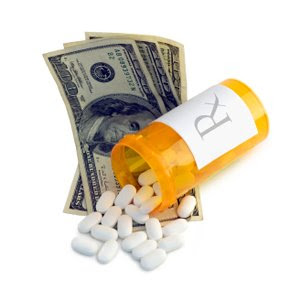 You almost have to take out a loan to pay for health insurance these days. Even if your company pays for half or more of your premium, a premium for a family still runs at least two to three hundred dollars a month. This is ridiculous, especially for people that do not visit the doctor very often. However, everyone is worried that if they do not have health insurance, then they will need it and they will not be able to get the help that they need, or they will get substandard healthcare because they do not have insurance. Many factors have surfaced over the years that cause health insurance to continue to stay on the rise.
One of the major problems that cause health insurance to continue to rise is the amount of frivolous malpractice lawsuits that are filed against doctors every year. Even if a doctor does not do anything wrong, they still have to pay the court costs, which usually are paid for out of their malpractice insurance. And if a doctor does make a mistake they can pay ten’s of millions of dollars in damages. All of this causes doctor’s to pay more for malpractice insurance, which translates into higher costs to their patient’s so they can continue to survive. One of the best ideas I have heard to help combat this problem, is legislature that puts a cap on monetary awards that are awarded for punitive damages in these lawsuits. Anything over the cap will be given to the state to help pay for schools, roads, and other things for the community. This will slow people down who want to sue just to get rich quick, but will still allow people to sue if a wrong has truly been committed.
Another major problem that causes health insurance problems is the ability of health insurance companies to get out of paying the full amount requested by a doctor. Health insurance companies rarely pay half of what a doctor’s office requests, so the doctor’s office usually has to eat the lost costs. This causes doctor’s offices to raise their prices to help shoulder the burden of these lost profits. An easy solution would be to implement some kind of regulations that would allow doctor’s offices to collect the full amount for a visit. These regulations would force health insurance companies to pay the amount that doctor’s charge, thus lowering the prices of doctor’s visits for all of their patients.
Health Insurance – Know What's Not Insured!
Labels: best health insurance, health care insurance, health insurance options, health insurance plan, inexpensive health insurance, online health insurance | Around 7 million people in the UK are covered by health insurance, the majority being covered through their employers. The problem is that few have really studied their policy documents and many misunderstand what is covered. And perhaps just as important, what isn't. If you expect health insurance to pay all your health costs, you're mistaken.
Health insurance is designed to provide protection for curable, short-term health problems and allow policyholders to jump the NHS queues to see consultants, be diagnosed, receive surgery or be treated. That sounds fine, but before you buy you need to appreciate the treatments and situations that fall outside the scope of the cover.
But first a word of warning. This article does not relate to any specific policy and the terms and conditions issued by individual insurers do vary. So please ensure you also check your policy documents. After reading this article, you'll know what to look out for!
Sorry – it's a chronic condition
If a condition can be cured and is not a long-term problem, your insurance company will classify it as acute and should meet the cost. If your problem is incurable or it's a problem that, despite appropriate treatment, will be with you for a long time, then your insurance company will classify it as chronic - and no, you won't be covered.
But drawing a firm line between what is acute and what is chronic is fraught with problems, and leads to the biggest area of conflict between insurer and policyholder.
Everyone agrees that diabetes and asthma are chronic conditions as you're likely to suffer from them for the rest of your life. So those sorts of condition are not covered.
Problems arise when the medical team initially considers a patients' illness to be curable, but the condition subsequently deteriorates and the doctors change their mind, it's now become incurable. This can happen especially in the treatment of some types of cancer.
In these circumstances, the condition is initially defined as acute and is therefore insured, but deteriorates and becomes chronic - and outside the terms of cover. This is possible as insurers retain the right to reclassify a condition from acute to chronic during treatment.
Sorry - it's too long term The insurance company will not pay out for long term treatment. But you need to check your policy documents to see how they define “long-term”. You can find the situation where a course of drugs extends for say 12 months, but the insurer will only pay for ten months.
Sorry – it's preventative Your insurance is designed to pay for the treatment and cure of conditions when they arise. It is not designed to pay for treatments that are used to prevent an illness.
Again, the problem of definition arises. Sometimes it is arguable whether a treatment is preventative or a cure. Take the drug Herceptin for example. This drug can be used in the early stages of breast cancer. Research shows that Herceptin can halve the incidence of cancer returning for women who have a particularly virulent form of the cancer known as HER2. In this situation, is Herceptin offering a cure or is it a preventative?
Insurance companies are split on the debate. Norwich Union, WPA, BUPA and Standard Life Healthcare will pay for Herceptin for HER2 patients whereas Legal and General and Axa PPP will not.
Sorry – the drug is not approved Two of the main attractions for taking out health insurance are: to jump the queues at the NHS, and to get the latest treatments and drugs. But there's a rider.
Unless the drug has been approved for use by the NHS in England and Wales, by the Institute for Health and Clinical Excellence, your insurer is unlikely to approve its use. The problem is that the Institute's brief is not simply to decide whether a drug works, but to carry out a cost/benefit analysis to ensure that the benefits to the nation outweigh the financial costs of using it in the NHS. Not an easy brief - and one that has placed the Institute under scrutiny for the extended delays in drug approval.
The compromise hit on by the Financial Ombudsman is that if a health policy won't pay for the use of experimental treatments, then it should meet the cost of an approved conventional treatment with the policyholder footing the bill for the balance if the experimental treatment is more expensive.
Sorry – it's a pre-existing condition
The basic principle is that if you are already suffering from a condition when you start a policy, then that condition “pre-exists” the policy and any claims for its treatment are invalid.
For this reason, insurance companies insist you complete an exhaustive questionnaire before they agree to insure you. After all they need a clear picture of your medical condition before they quote. For many applications, the insurer will, with your approval, also write to your GP for specific details of your medical history. They like to have a complete picture.
So lets say some years ago you injured your knee playing football. It appeared to recover but now it turns out that you have a torn cartilage and need an operation. The insurer could argue that this is a pre-existing condition and you have to pay for its' treatment.
Some insurers try to accommodate these grey areas with a moratorium provision within your policy. These provisions typically say that so long as you have been symptom free for two years relating to any condition you've suffered from within the last 5 years, then they will pay for subsequent treatment. Not all policies have these moratorium provisions and the time periods do vary between insurers. You should carefully read your policy.
Sorry – its not covered
Health Insurance is an annual contract – just like your car insurance. So when it comes to renewal, your insurer is at liberty to review not only your premium but also change the conditions on which your cover is provided.
Therefore, if your policy comes up for renewal mid way through a course of treatment, it's possible to find that your new policy no longer covers that particular treatment. This means that you will have to foot the bill for the balance of the treatment.
Furthermore, with ongoing advances in medical research, more and more conditions are becoming treatable. This progress has the effect of shifting back the dividing line between chronic and acute conditions.
This hits the insurers' pocket in two ways. With more conditions being reclassified as acute, the number of claims is increasing. And there's also a trend for new treatments to cost more – Herceptin being a good example. The net result is that the insurers are finding themselves having to pay out far more. This is inevitably passed back to you through increased renewal premiums. And in an attempt to reduce their risk exposure, insurers have a tendency to adjust their definitions and exclusions. This means that you must read your renewal notice closely before you decide to renew.
So when you are considering Health Insurance, be aware that everything is not always black and white. And if you've got insurance and need treatment, always contact your insurer without delay and get them to confirm that your treatment is indeed covered
Health Insurance: The 101 Explained
Labels: health insurance for the self employed, health insurance rates, health insurances, health insurence, health plan, online health insurance, self employed health insurance | We all understand the importance of health insurance; however, as the types of health insurance continue to increase it is becoming more and more difficult to select the type of coverage that is best for you and your family. To help you find out which type of policy might benefit you the most, let’s take a look at the most common types of policies.
There is usually a lot of hype regarding HMOs so let’s look at that one first. A HMO is a health maintenance organization plan that works with a specified group of doctors and hospitals within the network. A primary healthcare physician is selected and you must obtain referrals for care that cannot be provided by that physician. The benefits of this type of plan are lower office visit costs and prescription drug co-pays. In addition, there will typically be either no or limited deductible costs for hospital stays. Depending on your coverage, there may also be no pre-existing condition cause limitations. It is also important to understand that your choice of doctors and hospitals will be limited with a HMO and you won’t be able to have out of network services covered.
A PPO or Preferred Provider Organization works similar to a HMO; however, the major difference is that you are not required to select a primary care physician. In addition to the benefit of being free to choose your own physician without worrying about a referral you also gain the benefit of limited or no deductible costs for hospital stays as well as a possible larger selection of physicians that might be available with a HMO. Out of network services may also be covered; however, for a higher charge than in network services.
A POS, or Point of Service, is also similar to a HMO in that you select a primary care physician. The difference is that you are free to choose out of network treatment if you’re willing to pay a higher out of pocket cost. Another option is what is known as a traditional coverage policy. This type of policy will have a higher monthly premium as well as deductibles. In addition, you will generally be required to pay for services out of your own pocket up front and then submit claim reimbursement forms.
You may also wish to consider various types of disability plans, which cover a percentage of your income in the event that you experience an illness or accident that prevents you from working for a period of time. A short term disability plan will provide benefits from the first day of an accident or the eighth day of an illness up to 26 weeks. Generally, this type of plan will cover 66% of your weekly income.
Long term disability will begin after short term coverage has expired and will provide coverage for a variable term, depending on the policy you select. Some policies are limited to providing coverage up to two years while others will cover you up to the age of 65.
Get Quotes Compare Online Health Insurance Quotation
Labels: health insurance quote, health insurance quotes, online health insurance | When you get a health insurance quote, you are getting a quote on a certain kind of plan. Get a free group health insurance quote online and find out more about a low cost group health insurance plan. Self employed health insurance tesco insurance online insurance quotes california health insurance plan geico insurance electric insurance. The health insurance Quote Display allows users to view insurance company details, view plan benefits and exclusions, and compare many different quotes at once. Just select a plan that suits your need to receive health insurance quotes. to show you the options available with quotes that give you the health insurance plan you need at premiums you can afford. Get a free health insurance quote online and find an affordable, low cost health insurance plan anywhere in the United States.
here for a health insurance quote. Enter your zip code, select your state, and click "begin quote" to start your health insurance quote. Click here to get your health insurance quote. Click below to research individual and family health insurance, and get health insurance quotes. For immediate online health insurance quotes you can click on this link.
Also, understand what your budget looks like when getting an online health insurance quote. For the most part getting an affordable health insurance quote is fast and free online. Getting a health insurance quotes for is easier than... Save big on your health insurance by getting up to five competitive health quotes from companies who compete for your business.
You can compare life insurance, compare auto insurance, compare health insurance and compare home insurance quotes within minutes. Our services include auto insurance quotes, health insurance, life insurance, home insurance and more, all with a free online insurance quote service. Fast, instant quotes on auto, home, health and life insurance. Life insurance no medical exam state farm insurance global medical insurance healthcare insurance, veterinary pet insurance auto insurance quotes. Fill out a request and get an auto insurance, health Insurance, or life insurance quote today. Dental insurance affordable health insurance insurance sales dental insurance plan blue cross insurance auto insurance quote. Collector car insurance state farm auto insurance guardian health insurance auto insurance california insurance quotes dental insurance plan. National insurance - get a free quote for auto, life or health insurance.
30 year life insurance, health insurance in california california health insurance quote, allstate insurance company key man insurance, car insurance rates. Workers compensation insurance life insurance policies health insurance illinois insurance broker, car insurance rates insurance quote. Cheap car insurance, blue cross blue shield health insurance car insurance prices online insurance quote insurance and accident health insurance quote. Request a rate quote for life, health, home, or car insurance. AIM Center: InsuranceProvides insurance quotes for products including car insurance, life insurance, health insurance, and homeowners insurance.
Basics of Hospital Expense Insurance
Labels: online health insurance, private health insurance, self employed health insurance, short term health insurance, student health insurance, temporary health insurance, united health insurance |Hospital expense insurance covers the expenses incurred on a patient’s hospital stay, provided he/she already has a subscription in this regard.
Nobody has ever lived a life time without a bout of illness and a subsequent hospital stay. This is something inevitable as no one is perfectly immune to diseases. And every hospital stay one has brings with the discharge order a mind boggling bill - the psychological effect of which is more than enough to send back the fitness-regained patient for another few days for treatment in the same hospital. When it comes to health related issues, no one could keep a check on the cash flow. After all, in such circumstances, it is the question of life and health that supersedes the financial issue. But with hospital expense insurance, one could reclaim the money spent by producing all the relevant certificates and bill.
Hospital expense insurance is one form of the health insurance that pays for the expenses incurred for the patient’s room and board costs. The coverage also compensates financially for incidental expenses such as x-rays, the use of the operating room, anesthesia, drugs and laboratory charges. When it comes to payment, some insurance providers prefer to pay the claim on an indemnity style where the insurer pays a definite sum each day for a set maximum number of days. Some players, on the other hand, opt to pay the actual bill or a percentage of the actual amount regardless of what the amount the bill indicates.
Generally, at the time of the payment, the insured is paid a claim that amounts to a fixed percentage of the policy amount minus the deductibles. Various hospital expense insurance policies follow different schemes and hence the payable amount varies a lot. The customer should ideally see if the "stop-loss" or "coinsurance maximum," which limits the insured person’s liability is at an acceptable limit. A decently followed scheme does not put much burden on the customer. Also look for those insurance providers who offer a maximum benefit ceiling.
Practically, there are a large number of hospital expense insurance policies which are rejected on technical grounds. The reality is that, for the insurance firms, their aim is to make profits and by denying one a hospital expense insurance policy claim, actually the company is gaining profits in larger numbers. Inadequacy or discrepancy in the information provided by the customer is one of the grounds in which they deny a policy. Hence, the customer should ensure that he/she provides the correct and updated information to the insurance companies.
Also, the customer must be thorough with the rules and regulations that define the hospital expense insurance policy. See to it that all relevant documents and papers are in place. Remember, a missed piece of document is a valid ground for refusal of a claim.
Before buying any hospital expense insurance policy, the customer ideally should be doing a bit of research on the insurance scene of his/her place of stay. One can go by references if you have any trusted friend or you know anybody who have had successfully claimed the hospital expense insurance. In this regard, browsing the insurance company’s home sites facilitates for an easy comparison of similar policies and their rates.
To conclude, how much the customer may need to shell out along side the claim amount so as to pay the hospital expense directly depends upon the hospital expense insurance policy he/she selected. And that requires a good application of discerning senses and yes, a bit of common sense as well.

 Posts
Posts

